CH. 000: Dedication, Forward, & Front matter

Dedicated to
♄
The real life tower maidens:
Margherita Farnese, Isabella di Mora, & Arcangela Tarabotti;
☉
St. Giordano Bruno, martyr,
forever ahead of the times;
☾
And the real Matteo dell’Amore—
I forgive you.
♄
Kling, klang, gloria.
Who sits within this tower?
A King's daughter, she sits within,
A sight of her I cannot win,
The wall it will not break.
The stone cannot be pierced.
— Brothers Grimm, 'Maid Maleen' Grimm, Jacob and Wilhelm. ‘Maid Maleen.’ Household Tales. Margaret Hunt, translator. London: George Bell, 1884. Available as ‘Maid Maleen | Annotated Tale’ at SurLaLunefairytales.com, https://www.surlalunefairytales.com/h-r/maid-maleen/maid-maleen-tale.html.
☉
An imprisoned person with no other book than the Tarot, if he knew how to use it, could in a few years acquire universal knowledge, and would be able to speak on all subjects with unequaled learning and inexhaustible eloquence.
— Éliphas Lévi, Transcendental Magic Lévi, Éliphas. Transcendental Magic: Its Doctrine and Ritual. Arthur Edward Waite, translator. London: George Redway, 1896. p.370
☾
If women really die and burn in hell,
They do not burn with fire—the prophet's hell.
No! But they wait, and wait, and wait, and wait,
For one who never comes—the woman's hell.
— Elsa Barker, ‘The Garden of Rose and Rue’ Barker, Elsa. 'The Garden of Rose and Rue: A Quatrain Sequence.' The Book of Love. New York: Duffield & Co., 1912. pp. 1-20
Forward
The following book was discovered in the city of Parma in 2019, soon before the global pandemic silenced the bustling streets and shut us all in our solitary towers.
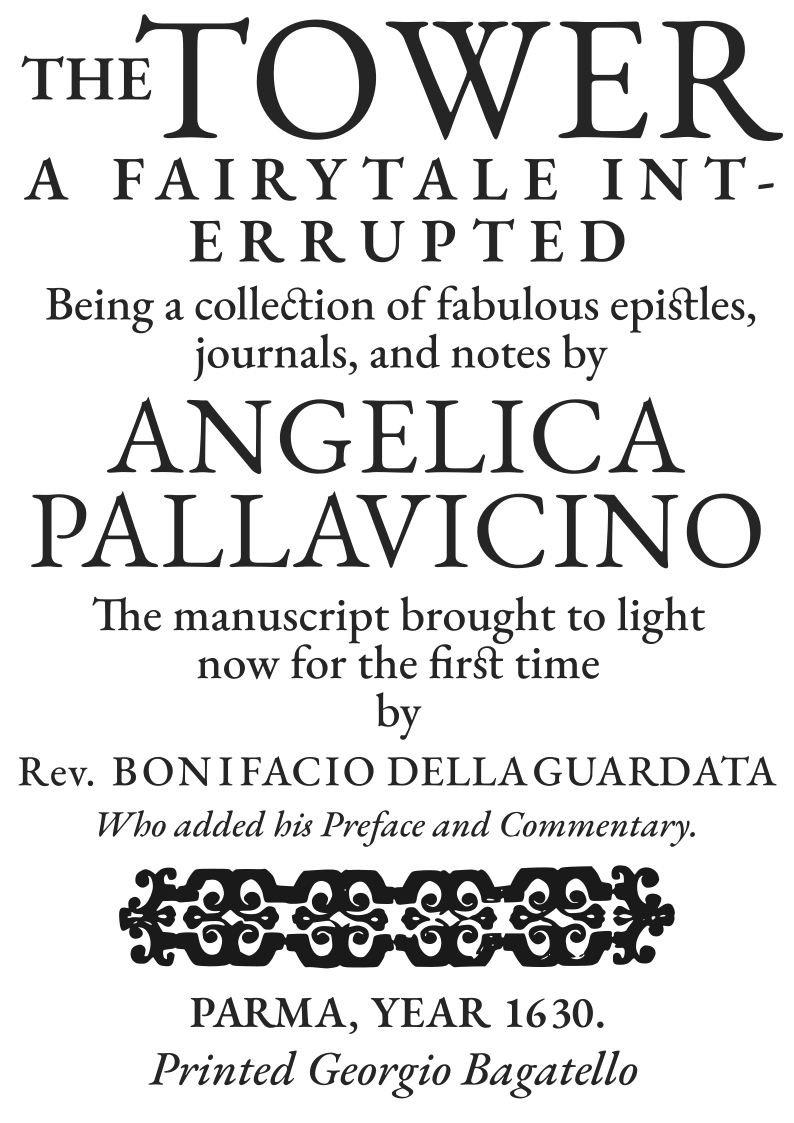
In the Piazza Ghiaia, a stone’s throw from the Museo Bodoniano, there is an old building with a new edifice which, unbeknownst to its inhabitants, once housed the clandestine printing press of Giorgio Bagatello (styled Georgius Bagatellus). The cellar of this building has an unusual feature, namely the clear contours of a fireplace, long since bricked up and forgotten. A remodeling effort by the current owners unsealed it at last, and inside the workers found a manuscript being prepared for print with a pressed title plate dated 1630.
The contents of this MS were a series of journals and letters by a 16th century woman named Angelica Pallavicino, arranged and occasionally commented upon by her friend and confessor, a Reverend Bonifacio Dellaguardata. We know, thanks to a note left with the manuscript, that this bundle of missives was delivered to the printer by Bonifacio’s nephew Claudio, who succeeded his uncle as the pastor of the San Giovanni Battista parish in Contignaco.
Our setting is the latter half of the 16th century. At this time seismic shifts in the political and religious landscape marked the end of Italy’s Golden Age. Within a hundred years, the Apennine civilization skipped the slow decline from Silver Age to Bronze, and proceeded straight to Iron and Brimstone. The Council of Trent rolled out the Catholic Counter-Reformation to combat the splintering of Christendom, and its bastard child the Inquisition rode on its heels, hellbent on the abolition of heresy and punishment of deviancy. The King of Spain laid claim to whichever free pieces of Italy were not swept under the Pope’s alb or pocketed by ruling families, and in Parma the Duke Farnese plotted to overthrow the last holdouts of feudal power between the Taro and Po rivers. Meanwhile the philosopher-magus Giordano Bruno peered into the night sky and portended by horoscope the toppling of Gaia from her geocentric throne.
At a time when several saints were judges and inquisitors, and even the witch-fighting Benandanti were interrogated on charges of witchcraft, the existence of this text is remarkable—even if, as far as I can tell, its questionable printer never actually brought it to publication. Certainly Signore Bagatello was not a publisher in good standing with the Holy Office, and indeed, the name is almost certainly a false one.
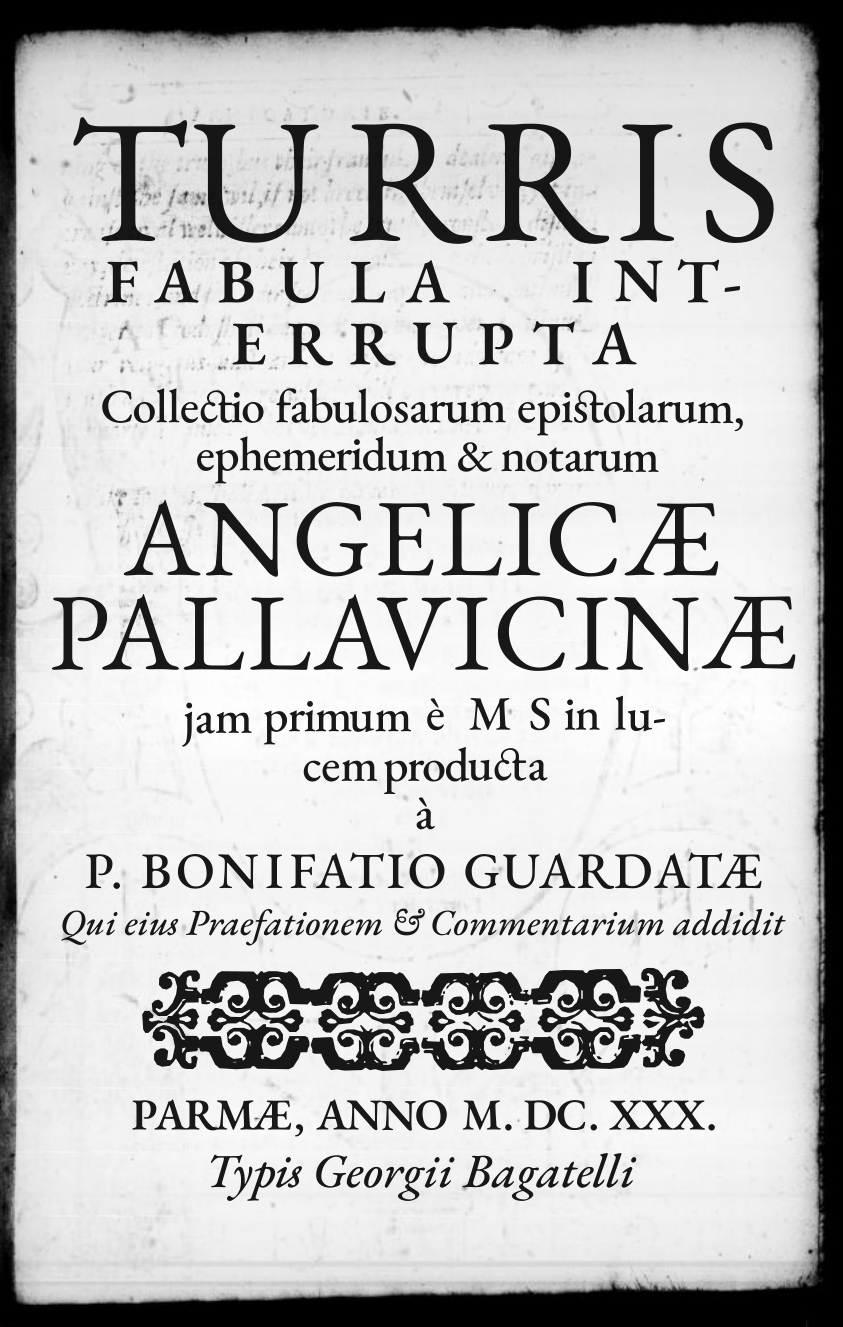
Yet wise Fortune can wait patiently for centuries before emerging from the realm of Platonic Ideas into public light, in lucem productae, seemingly ex nihilo at that sublime instant: the first moment it could be published and gotten away with. The book in your hands reproduces the mysterious manuscript for the first time with a modern English translation.
With slightly less trepidation than the original publisher at losing my head, I happily present to you…
Anna Maddalena presents...